HP Memories

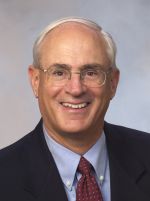

ForewordMr. Agilent -- Ned Barnholt I want to start by painting the picture of the high tech industry that the student Ned Barnholt faced when he enrolled at Stanford in 1961. The Microwave Division of HP in the middle 1960s was at once stimulating and challenging and rewarding. And stressful. In 1962, the company had made a crucial organizational change, and divisionalized, with the four R&D groups at the centralized HP Labs dividing into the first four operating divisions. These were the Microwave, Frequency and Time, Audio Video, and Oscilloscope product lines. Bruce Wholey was appointed Microwave Division (MWD) Manager, John Young as Marketing Manager, and we were expecting growth based on the past decades of statistical HP revenue experience of growing at 15% per year. Except for the fact that the technology industry was enduring the third year of doldrums, in a mild business recession, known as "The Kennedy Slide of 1962." MWD sales were flat from 1962-64 at just over $21 million dollars. Several years earlier, HP had acquired the Sanborn Company of Waltham, MA, a foremost medical equipment company, and it was running into economic problems, which led Packard to appoint Wholey to move there to straighten out product strategies and operations. So, in 1964 John Young was promoted to division manager, and things began to happen. John promoted Paul Ely to engineering manager and John Doyle to manufacturing manager, and me to marketing manager. And fortuitously, the blockbuster HP 851A/8551A microwave spectrum analyzer was rolled out for a waiting and eager customer base. In 1965, we grew by about 30%. Suddenly growth was thrust on us, and recruiting was crucial to our success. And Young quickly set up the new product planning process as integral to our weekly life. This took the form of the regular Wednesday morning planning meetings. Our engineering group had divided into four sections, so I had divided my marketing into four, and likewise, manufacturing. The objective of Young's clever process, (derived from his MBA training) was to put the responsibility for the 5-year new product plan down at the section manager level. For any section like signal generators, each lab section manager met with Young, Ely, Doyle and Minck once a month to review their plans. The beauty of this delegation to younger engineers was that they essentially were running their own business, under the review of the division leaders. How did that work? From 1964 to 1969, the division tripled revenues to $75 million, a 30% growth rate per year, twice the HP corporate average before computers. Next, Ely's team rolled out the magnificent network analyzer line ("Stamp out slotted lines," per Ely), and new signal generators and synthesizers to start to replace the venerable klystron line. During the 1960s Audio/Video moved to Loveland, counters to Santa Clara, and oscilloscopes headed to Colorado Springs. And with microwave topping $100 million by 1970, it was time to split Microwave Division and send half to Santa Rosa. All this preamble is to set the scene for our dramatic success in recruiting an army of new engineers for all that growth. Enter Ned Barnholt. The college recruiting process involved plant visits, and typically a day full of interviews including marketing and engineering and manufacturing personnel. These not only informed the applicant of the variety of HP functions, but usually pointed the HP offer of a specific job to a specific division functional group. I was one of Ned's interviewers, and we concluded that Ned would start in engineering but probably move to marketing after a year or two. To be honest, we didn't see Ned in three decades as CEO of the Agilent spinoff of 1999. How could we? We of course knew that of every 10 new hires, maybe two would leave for other companies, some would move up into top management, but it was hard to predict who and when. Sure enough, Ned worked in Ely's lab for 4 years, and then did move into marketing, but I was off to build light-emitting-diodes. Doug Chance took over my marketing manager role by that time, and was Ned's boss as he moved to marketing. By 1974 opportunity called, which was Ned's promotion to marketing manager at Al Bagley's Santa Clara division. A few years there, and the next call came to move to the new division being set up in Spokane, another spinoff of the Stanford Park Div. (the original Microwave Div.) Talk about stress, Spokane was full-on growth management, 20 employees to start, expected to grow to over 500 peope. Imagine the vision needed to construct everything from the buildings to a top-performing organization. Ned's oral history insights, below, are instructive. You can guess the next move. About 1985 Young and Bill Terry promoted Ned to manage the Electronic Instrument Group, back in Palo Alto. Assignments at this level demand a concise overview of the whole technology sector, and in this case required strong leadership in the halls of the HP Corporate Management Club which necessarily was throwing major resources to the exploding calculator and computer operations. The Instrument Group also faced major considerations of the sales force organizations, serving wildly different customers. (Remember the A-bag and B-bag sales force, one selling RF/Microwave, one general purpose products?) I have long used the term, management mercenaries, which I admit has a slightly derogatory tone, and yet describes the individual who moves along multiple assignments in managing product strategies and growth. With Lew Platt as CEO, in 1999 the decision was made to split the company and spin off the instruments, medical, chemical, and components product lines into a brand new technology entity, which was birthed with the conjunctive name, Agilent. Although the HP PR declined to speculate where the name came from, I'm guessing half of it was "agile." Agilent was born in 1999 at the end of the Bill Clinton boom, go-go expansion, major back orders as HP production could not keep up with customer demand. It was also complicated with customers duplicate ordering. And so the very assembly of such a disparate product grouping into a thriving organization was Ned's Job One. But fate awaited in the downturn of the first 2000s years, and this was the kind of business hit that "try men's souls." It necessarily involved personnel layoffs of over 8000 employees, an awful reality of a technology recession. But Ned's background of startup divisions and chaos management served him well, and Agilent emerged a highly successful business, spinning off its Medical and later, its Components products lines and focusing on Life Sciences and Communications. An essential part of Ned's history is his service on the Board of Trustees of the Packard Foundation, which has served as great philanthropy giants of the last half of the 20th century. That Board really needed the wisdom and guidance of men like Ned, whose amazing journey through life has prepared him for such service. Ned's personal HPMemoir demonstrates the essence of The HP Way in action, enlightened managers with lifetime committment. John Minck |
HP MemoriesThis memory of ned_barnholt's career at hp results from the work of the www.hpmemoryproject.org website of Marc Mislanghe, who with John Minck edited and published the original archive of Memoirs. After Marc's untimely death in 2014, Ken Kuhn has now assumed the custodianship with John, and together they will continue to expand the Memoirs section. One of the main objectives in starting this website in 2011 was (and still is today) to get in touch with people who have worked at hp from the birth of the company up to today. We are interested in hearing your memories no matter what division or country you worked in, or whether you were in engineering, marketing, finance, administration, or worked in a factory. This is because all of you have contributed to the story of this unique and successful enterprise. Your memories are treasure for this website. While product and technology are our main concern, other writings related to the company life are highly welcome, as far as they stay inside the hp Way guidelines. Anybody Else? Please get in touch by emailing the webmaster on the Contact US link at http://www.hpmemoryproject.org |
 About Us | Contact Us | Privacy Policy
  Back to
Story Selector
Back to
Story Selector
