HP People Stories
 Back to Story Selector


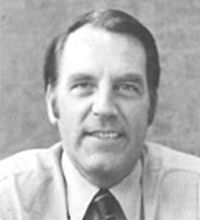 |
John Young was in the HP Class of 1957-58, which was an attempt by Packard to refresh the management ranks of the company. Virtually all of the top and middle management of HP in the late 1950's were middle-aged men, who had grown up in the WWII era, and joined the company well after their college age. Dave and Bill finally realized that they had been neglecting the pipeline of eligible young managers, ready to move up into the management ranks of the company.
In the years since 1945, the Graduate Schools of Business in the nation had thrived. There was the highly-successful example of Robert McNamera's "Brain Trust," a small group of whiz kids, who he organized at the Pentagon, during the WWII war years. That team created what came to be known as early "operations research," later to be called systems analysis. McNamera had previously come from the Ford Motor Company, and achieved production miracles, in materials and production, during those wartime periods of massive growth and serious materials shortages.
Dave and Bill decided that they would begin to recruit a group of MBA's into HP, to groom them for later management. This group included some very successful young men. John Young, Tom Perkins (later of venture capital fame), Dean Morton, Jim Treybig (later of Tandem fame), and many more.
John Young, a native of Idaho, grew up in a small town in Southeast Oregon, Klamath Falls, and earned his EE degree from Oregon State. He served a tour in the USAF, part of which was on the personal staff of Colonel John Stapp. Stapp was the brilliant research commander, some would say fearless, of the early Holloman AFB rocket-sled experiments. This included strapping himself on the front of a rocket sled, to test the process of bailing out of an airplane at barely-subsonic speeds. He didn't actually bail out of the sled, just tested human endurance during the speed run. John then obtained his MBA from Stanford, and worked his MBA summer as an intern in HP's finance department in 1957.
Upon full-time status, John was attached to the marketing department, and quickly was appointed Regional Sales Manager for the New York/NJ/Philadelphia Representative organizations. I moved from Microwave Application Engineer, to assist him. We used to joke, that our titles should really be Regional Sales Clerk. Our lowly status was confirmed at quota-setting time, because when the Rep owners visited to negotiate sales quotas for the next year, they would talk to John and me, for a time, then excuse themselves, and go directly to talk with Eldred and Packard to set the real sales quotas.
After 2 years, John was tapped by Finance Manager Ed van Bronkhorst, to run a project study which would lead to purchase of all the independent Rep companies. As one could imagine, such a project was fraught with political landmines. Each of the owners were personal friends of Dave and Bill, each was fiercely independent, and no one could be sure whether they would consider getting merged into the big corporation, and all its bureaucracy and rules.
The Rep acquisition program went so smoothly, no one could believe it. In fact, the very first company to sell out to HP was Earl Lipscomb of Texas. He, along with Tiny Yewell, of Boston, were both outspoken and overbearing. But those were the first two companies to sell out to HP. In our regional sales offices, we were told to anticipate that many, if not most of the reps, would choose to cut HP adrift and remain independent. So we had made plans for that contingency. We identified key senior field engineers in the Rep organizations we managed, approached them and contingently offered them management positions, in a replacement company field organization. The plan wasn't needed. Only 2 of the 13 Rep organizations, and the smallest, chose to decline the HP offer. No doubt they could all see the huge advantages to be a part of the HP family.
When the four charter divisions were established in 1962, John was appointed Marketing Manager for the Microwave Division (MWD). Two years later, division manager Bruce Wholey transferred to manage the Sanborn Medical acquisition, and John rose to Division Manager. In a very short time, he was to have a massive impact on HP management processes, especially on the new product strategy creation process.
He moved up through the ranks to Electronic Products Group Manager, to Vice President, and from 1978 to 1992 was President and CEO of the entire corporation.
I reported directly to John for about 6 years. He was undoubtedly the most incisive and well-organized person I have ever known. Dave and Bill were "intuitive" managers who grew into greatness, by sheer common sense and humanity. John brought his value to HP in a well-organized approach to professional management. It was his establishment of the Microwave Division new-product creation process that made that division grow from about $22 million in 1964 to $75 million plus, in 1969. The normal growth for HP Test & Measurement in those days averaged 15% per year, or doubling every 5 years. John more than tripled our sales revenues in 5 years.
Even more important, as described in the SPD Profile section, he developed a whole cadre of young managers, ready to take their place in future organizations. They cut their teeth on small product lines, defending them from competition, and creating dramatic new introductions, while still under the guidance and counsel of older and more seasoned managers.
John's memory was prodigious and legendary. When paired with Paul Ely, the MWD R&D Manager (below), wonderful things would result. Paul was relentless, highly aggressive, and a dominating conversationalist. Product strategy meetings were scheduled every Wednesday morning, religiously. Since there were 4 product groups in the MWD, the division management team, Young, Ely, Doyle and Minck would hear from each team once a month.
I recall in one meeting, Young was tilted back on his chair, leaning against the wall, with his eyes sort of closed. Ely was stating something like, "We are doing this, on this project, because of A and B and C." John tilted forward, his chair hitting the floor, and said, "Wait a minute, Ely, a year ago, on this same point, you said almost the opposite, D and E and F." Without a moment of hesitation, Ely rebutted, "Yes, but G and H and I, because of J and K and L."
In that fabled Microwave Division, John Young's young second lieutenants became the "Class the HP Stars fell on." In a way they were just like the famous West Point class of WWII generals, who all came from the same graduating class. The Microwave Division's management process became highly visible, since Packard would point to Young's successes, in revenue growth and profitability. It became known as the "triad" organization, with marketing, R&D and manufacturing sub-managers, trusted to run their own small businesses of perhaps $5 million a year in revenue.
In a slightly derogatory tone, the movement of so many of those successful Microwave Division managers, into other organizations of the company became known as the "Microwave Mafia." A long line of young men moved to positions of great influence in the company, and brought along with them the smooth organizing principles, that John established. Paul Ely, John Doyle, Doug Chance, Ned Barnholt, Jim Ferrell, Dick Anderson, Hal Edmundson, George Bodway, Dick Hackborn, Harold Kramer, Al Steiner, Dave Weibel, Scott Wright, Tom Lauhon, Brian Humphries, Marc Saunders, and many more.
John was a knowledgeable manager. He practiced MBWA religiously, visiting production operations regularly, and learning of current problems. One morning, just after we arrived at work, John and I were chatting over a cup of coffee. One of the plating shop process managers came up, and urgently told John of a possible problem, that had happened about 10 pm the previous night. It seemed some excess acidic chemicals had inadvertently been released into the Palo Alto sewer system. John said, "No problem, I know all about it, and it was taken care of. The city was notified. I was here last night, and learned of it when I was down having coffee with the night crew."
In later days of world-notoriety for our gigantic $75 billion HP corporation, it might be forgotten that it was John Young, who took over as CEO in 1978, when the company revenue was $1.9 billion, and managed it until 1992, when he left with a revenue of $16.4 billion. In the process, he led HP into the fast-growth areas of printing technology and computer and PC initiatives, that were exceedingly complex. I assert that he deserves extraordinary credit, but his recognition seemed to disappear rather quickly, with the entry of the next CEO, Lew Platt. I believe that is unfortunate and sad.
Michael Malone's book, Bill and Dave, relates the growing rift between Young and Packard in John's last years as CEO. It may have Packard's age showing or the fact that Young started working with Presidential candidate Bill Clinton on high-tech business issues. The new book by House and Price, The HP Phenomenon, gives extra credit to Young for the complex computer business strategies that he developed during a chaotic era of computer system rivalries. At one time HP was selling computer products with FIVE different operating systems. Remember RISC, and Joel Birnbaum?
 About Us | Contact Us | Privacy Policy
